
2026 Market Analysis Report: Global Ultrasound Probe High-Level Disinfection System Market Valued at US$553 Million in 2026, Projected to Reach US$946 Million by 2032 at 9.3% CAGR
Published Date: Thursday,05 Nov,2026


 Ultrasound Probe High-Level Disinfection System
 Product Definition
Ultrasound Probe High-Level Disinfection System is a dedicated device-and-consumables solution used to achieve high-level disinfection of reusable ultrasound probes, especially those used in semi-critical or high-risk clinical procedures, by applying a validated chemical or physical disinfection process under controlled conditions to reduce microbial contamination between patients and support infection-prevention workflows in healthcare settings.
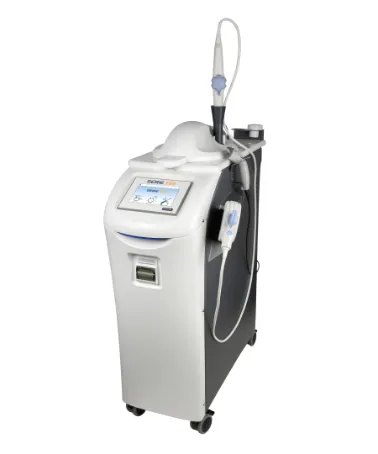
Figure1. Global Ultrasound Probe High-Level Disinfection System Market Size (US$ Million), 2021-2032
According to the latest report "Global Ultrasound Probe High-Level Disinfection System Market 2026 by Manufacturers, Regions, Type and Application, Forecast to 2032"published by GIR (Global Info Research), the global Ultrasound Probe High-Level Disinfection System market was valued at approximately USD 512 million in 2025 and is projected to reach USD 553 million in 2026. With a CAGR of 9.3% during the forecast period from 2026 to 2032, the market is expected to further expand to approximately USD 946 million by 2032. This growth is driven by increasing market demand, evolving industry trends, and expanding application opportunities worldwide.
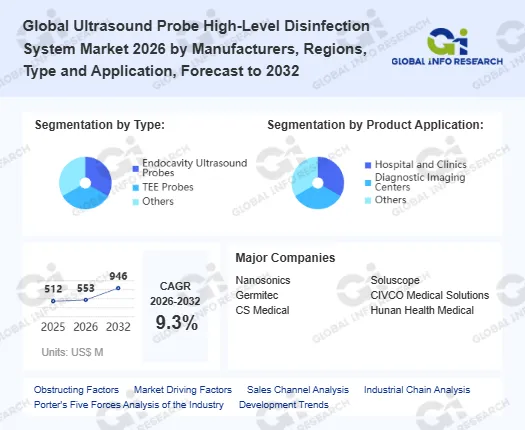
Ultrasound Probe High-Level Disinfection System Market Summary
Research Background:
The Ultrasound Probe High-Level Disinfection System market has emerged alongside the rapid expansion of ultrasound utilization across women’s health, emergency medicine, cardiology, and outpatient specialty care. Endocavity and transesophageal ultrasound probes are classified as semi-critical medical devices due to their contact with mucous membranes, requiring high-level disinfection between patients. As healthcare systems globally strengthen infection prevention protocols and quality assurance standards, reliance on manual or loosely controlled reprocessing methods has increasingly shifted toward automated, standardized disinfection systems. This structural shift has positioned ultrasound probe high-level disinfection systems as an essential component of clinical workflow infrastructure rather than optional auxiliary equipment.
Development Status:
At present, the market is characterized by a relatively concentrated competitive landscape led by specialized international manufacturers with established installed bases and recurring consumables ecosystems. Adoption rates are high in developed healthcare systems where compliance and audit requirements are stringent, while penetration in emerging markets remains in an earlier stage. The business model is largely driven by capital equipment placement followed by recurring revenue from consumables, service, and maintenance. Technologically, chemical-based and ultraviolet-based disinfection modalities coexist, with differentiation increasingly centered on workflow efficiency, safety, traceability, and system integration rather than core disinfection efficacy alone.
Future Trends:
Compliance-Driven Penetration Expansion: As infection control audits and accreditation standards continue to tighten, high-level disinfection systems are expected to transition from recommended best practice to baseline configuration in facilities using semi-critical ultrasound probes, supporting steady global installation growth.
Ecosystem and Digital Integration as Competitive Differentiators: Vendors will increasingly compete on integrated platforms that combine hardware, proprietary consumables, connectivity, and traceability features. Seamless integration with hospital quality systems and asset management platforms will become a key value driver.
Geographic Diversification and Localized Competition: Growth in Asia-Pacific, Latin America, and other emerging regions will accelerate market expansion. At the same time, regional manufacturers are likely to introduce cost-competitive alternatives, intensifying price segmentation while broadening overall market accessibility.
Supply Chain Analysis:
l Upstream
The upstream segment comprises precision mechanical components, sealed chamber assemblies, fluid handling systems or ultraviolet modules, sensors, embedded control electronics, and specialized software. It also includes disinfectant chemistries, single-use consumables, validation indicators, and packaging materials that must meet stringent compatibility and regulatory requirements. Manufacturing is typically conducted under medical-grade quality systems, with component suppliers and contract manufacturers playing an important role in scaling production and ensuring compliance.
l Downstream
Downstream demand is concentrated in hospitals, outpatient imaging centers, women’s health clinics, cardiology departments, and perioperative settings where semi-critical ultrasound probes are routinely used. Purchasing decisions often involve infection control teams, biomedical engineering departments, and clinical stakeholders. The downstream value structure extends beyond initial equipment sales to include recurring consumables, preventive maintenance, training, and documentation support, making lifecycle service capability a central determinant of long-term market performance.
Introduction of Leading Companies in the Industry

Nanosonics is a specialized medical technology company focused on infection prevention and reprocessing solutions, headquartered in Australia, with its core product portfolio centered on high-level disinfection systems for ultrasound probes. Through in-house research and development, the company has established an integrated platform combining automated disinfection devices with proprietary consumables and service support, building a substantial installed base across hospitals and imaging centers worldwide. Its business model is characterized by capital equipment sales complemented by recurring consumables revenue, creating a resilient revenue structure. Leveraging its technological expertise and brand recognition in probe high-level disinfection, Nanosonics has become a key player in this niche market segment.
Nanosonics Ultrasound Probe High-Level Disinfection System Product Introduction:
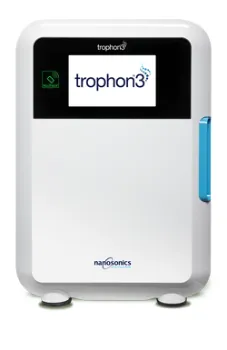
Nanosonics’ Ultrasound Probe High-Level Disinfection System is centered on the trophon platform, specifically designed for the reprocessing of endocavity and other semi-critical ultrasound probes. The system delivers a controlled and automated high-level disinfection cycle to standardize workflow, reduce operator variability, and support infection prevention compliance. It is engineered for safe, enclosed operation and consistent cycle performance, enabling efficient probe turnaround in high-utilization clinical environments such as imaging departments, women’s health, and cardiology.
From a platform perspective, Nanosonics adopts an integrated solution model combining capital equipment, proprietary consumables, and service support. The disinfection system operates within a validated ecosystem that includes dedicated consumables and workflow controls, often supported by traceability and documentation features to meet hospital quality management and audit requirements. Supported by a broad global installed base and ongoing product development, the company has established a strong competitive position in the ultrasound probe high-level disinfection market.
Ultrasound Probe High-Level Disinfection System Report Chapter Summary:
Chapter 1: Ultrasound Probe High-Level Disinfection System Industry Definition and Market Overview
This chapter clearly defines the product definition, characteristics, and industry statistical scope of Ultrasound Probe High-Level Disinfection System, systematically introduces its mainstream product classifications and key application areas, and presents the overall size and future outlook of the global market.
Chapter 2: In-depth Analysis of Core Ultrasound Probe High-Level Disinfection System Companies (2021-2025)
This chapter focuses on the main players in the Ultrasound Probe High-Level Disinfection System market. For each representative company, it not only introduces its basic overview, main business, and product portfolio, but also highlights its core operating data in the Ultrasound Probe High-Level Disinfection System field, including sales volume, sales revenue, pricing strategies, and the latest development trends of the company from 2021 to 2025.
Chapter 3: Global Competitive Landscape Analysis (2021-2025)
This chapter examines the global Ultrasound Probe High-Level Disinfection System competitive landscape from a macro perspective. By comparing the Ultrasound Probe High-Level Disinfection System sales volume, pricing, revenue, and market share of major companies from 2021 to 2025, it quantitatively analyzes market concentration and interprets the competitive strategies and market position evolution of core manufacturers.
Chapter 4: Ultrasound Probe High-Level Disinfection System Major Regional Market Size and Prospects (2021-2032)
This chapter conducts a regional-level analysis of the global Ultrasound Probe High-Level Disinfection System core markets. It will present historical data on the Ultrasound Probe High-Level Disinfection System market size (sales volume and revenue from 2021-2025) in major regions such as North America, Europe, and Asia Pacific, and provide market outlook forecasts for 2026-2032.
Chapter 5: Ultrasound Probe High-Level Disinfection System Product Type Segmentation Market Forecast (2021-2032)
This chapter delves into the Ultrasound Probe High-Level Disinfection System product structure. It will segment the Ultrasound Probe High-Level Disinfection System market by different types (such as Endocavity Ultrasound Probes、TEE Probes、Others, etc.), and analyze in detail the historical market size of each segmented product category from 2021 to 2025 and the future growth trends from 2026 to 2032.
Chapter 6: Ultrasound Probe High-Level Disinfection System Application Field Segmentation Market Forecast (2021-2032)
This chapter delves into the downstream application demand for Ultrasound Probe High-Level Disinfection System. The market will be segmented by different application areas (such as Hospital and Clinics、Diagnostic Imaging Centers、Others, etc.), presenting the historical market size for each area from 2021-2025 and future demand forecasts from 2026-2032.
Chapters 7-11: In-depth Analysis of Global Regional Markets (2021-2032)
This section is the core module of the Ultrasound Probe High-Level Disinfection System report, providing an in-depth country/regional analysis across five major regions: North America, Europe, Asia Pacific, South America, and the Middle East & Africa. The chapter structure for each region is consistent:
Segmentation by Country/Region: Analysis of the market size and forecasts for major countries within the region from 2021-2032.
Segmentation by Product Type: Presentation of the market structure and development forecasts for different product types within the region from 2021-2032.
Segmentation by Application Area: Analysis of market demand and prospects for different application areas within the region from 2021-2032.
Chapter 12: Global Ultrasound Probe High-Level Disinfection System Market Dynamics, Challenges, and Trends
This chapter aims to analyze the key internal and external factors affecting the development of the Ultrasound Probe High-Level Disinfection System market. It systematically reviews the core drivers of Ultrasound Probe High-Level Disinfection System market growth, the main obstacles and challenges faced, and assesses future product, technology, and market development trends.
Chapter 13: Ultrasound Probe High-Level Disinfection System Industry Chain Structure Analysis
This chapter analyzes the entire industry chain ecosystem of the Ultrasound Probe High-Level Disinfection System industry. From upstream raw material supply to midstream production and manufacturing, and then to downstream end-use applications, it analyzes the current status, cost structure, and collaborative relationships of each link.
Chapter 14: Sales Channel Model Research
This chapter focuses on the distribution channels of Ultrasound Probe High-Level Disinfection System products. It analyzes the market share, advantages and disadvantages, and typical cases of mainstream sales channels, and explores the innovation and development trends of channel models.
Chapter 15: Research Conclusions and Strategic Recommendations
As a summary of the report, this chapter will distill the core findings and conclusions of the entire report and, based on a comprehensive understanding of the Ultrasound Probe High-Level Disinfection System market, provide actionable strategic development recommendations for industry participants and potential entrants.
For more information, please refer to "Global Ultrasound Probe High-Level Disinfection System Market 2026 by Manufacturers, Regions, Type and Application, Forecast to 2032". This report analyzes the supply and demand situation, development status, and changes in the industry, focusing on the development status of the industry, how to face the development challenges of the industry, industry development suggestions, industry competitiveness, and industry investment analysis and trend forecasts. The report also summarizes the overall development dynamics of the industry, including the impact of the latest US tariffs on the global supply chain, the supply relationship analysis of the industrial chain, and provides reference suggestions and specific solutions for the industry in terms of products.
Previous News:
Global Wheeled Chassis Dual-Arm Robot Market Valued at US$256 Million in 2026, Projected to Reach US$468 Million by 2032 at 10.5% CAGR
Next News:
Global PAA Anode Binders Market Valued at US$270 Million in 2026, with Silicon-based Anode Binders Driving Growth and Power Battery Applications Projected to Grow at 25.4% CAGR Through 2032
The copyright of this article belongs to Global Info Research. Without the written authorization of our company, no organization or individual may reprint, quote, copy, adapt or use it for commercial purposes in any way. When authorized to use, the original source must be indicated as "Global Info Research" and the complete copyright information must be retained.
- We Provide Professional, Accurate Market Analysis to Help You Stay Ahead of Your Competition.Speak to our analyst >>

Our Clients
What We Can Provide?
With better results and higher quality products,Our professional reports can achieve four things:

Insight into the industry market information

Analyze market development needs

Prospects for future development

Develop industry investment strategy
- Digging deeper into global industry information and providing market strategies.Contact Us >>
- We Provide Professional, Accurate Market Analysis to Help You Stay Ahead of Your Competition.Speak to our analyst >>
Our Clients
What We Can Provide?
With better results and higher quality products,Our professional reports can achieve four things:
Insight into the industry market information
Analyze market development needs
Prospects for future development
Develop industry investment strategy
- Digging deeper into global industry information and providing market strategies.Contact Us >>