
2026 Leaf and Lawn Vacuum Outlook: 4.6% CAGR Forecast as Lithium-Ion Electrification, Mulching Systems and Smart City Integration Push the Market Toward USD 1,594 Million by 2032
Published Date: Thursday,12 Nov,2026


Leaf and Lawn Vacuum Market Summary
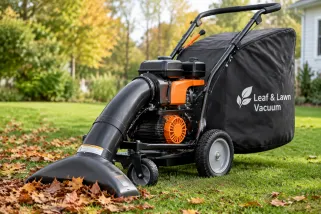
A lawn and leaf vacuum is a piece of landscape maintenance equipment designed to clear organic debris from lawns and outdoor grounds; it utilizes a powerful suction system to gather fallen leaves, grass clippings, small twigs, and other litter. The device typically consists of a high-speed impeller fan, a suction inlet or hose, a collection bag or storage bin, and either a gasoline engine or an electric motor. Some models also integrate a mulching function, allowing collected leaves to be shredded to facilitate easier transport, disposal, or composting. This equipment is widely utilized in various settings, including residential gardens, public parks and green spaces, golf courses, municipal landscaping projects, and commercial property maintenance. The upstream segment of the lawn and leaf vacuum collector industry supply chain comprises suppliers of engines or motors, metal or engineering plastic housings, impeller fans, hoses, and filtration components. The midstream segment consists of complete unit manufacturers responsible for designing the suction structure, developing the mulching system, and assembling the final product. Downstream users primarily include residential homeowners, professional landscaping service companies, municipal park maintenance departments, and golf course operators. These products are typically sold through landscape machinery dealerships, hardware and building supply stores, specialized landscaping equipment channels, and e-commerce platforms. In 2025, the global production volume of lawn and leaf vacuum collectors is projected to reach approximately 2.15 million units, with a global average market price of approximately $520 per unit. The gross profit margins for major companies within the industry range from approximately 22% to 36%. Also in 2025, the global production capacity for lawn and leaf vacuum collectors is estimated to be around 2.87 million units.
Figure 1. Global Leaf and Lawn Vacuum Market Size (US$ Million), 2026-2032
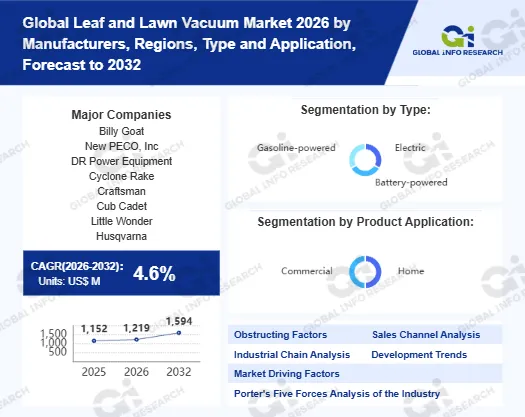
According to the latest report "Global Leaf and Lawn Vacuum Market 2026 by Manufacturers, Regions, Type and Application, Forecast to 2032" published by GIR (Global Info Research), the global Leaf and Lawn Vacuum market was valued at approximately USD 1152 million in 2025 and is projected to reach USD 1219 million in 2026. With a CAGR of 4.6% during the forecast period from 2026 to 2032, the market is expected to further expand to approximately USD 1594 million by 2032. This growth is driven by increasing market demand, evolving industry trends, and expanding application opportunities worldwide.
Figure 2. Global Leaf and Lawn Vacuum Top 14 Players Ranking and Market Share (Ranking is based on the revenue of 2025, continually updated)
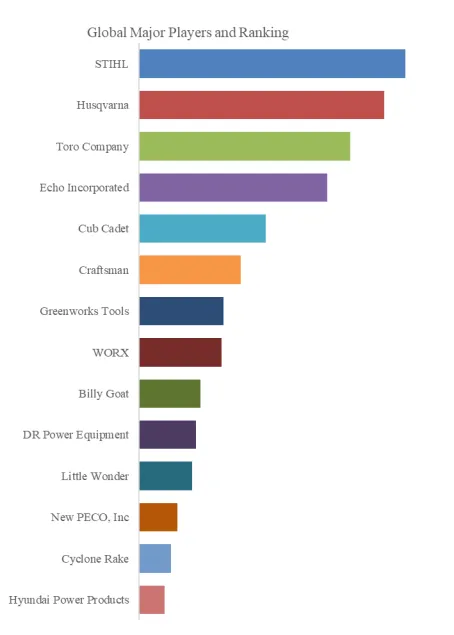
This report profiles key players of Leaf and Lawn Vacuum such as STIHL,Husqvarna,Toro Company,Echo Incorporated
In 2025, the global top five Leaf and Lawn Vacuum players account for 26.55% of market share in terms of revenue. Above figure shows the key players ranked by revenue in Leaf and Lawn Vacuum.
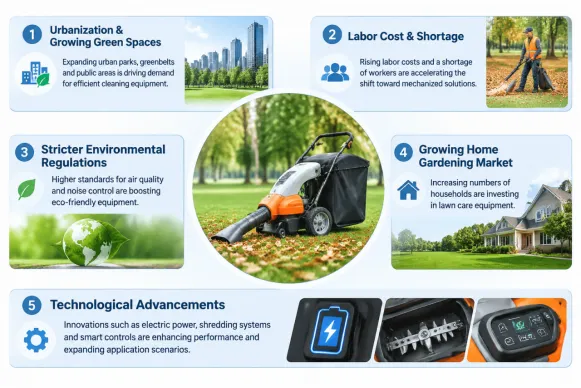
Market Drivers:
1. The ongoing global urbanization process has led to a continuous expansion of urban green spaces; consequently, the demand for efficient cleaning and maintenance equipment across various public areas—such as urban parks, residential greenbelts, commercial plazas, and sports venues—has risen significantly. Against this backdrop, lawn and leaf vacuum collectors have emerged as a vital mechanical alternative to traditional manual sweeping, gradually becoming a core tool within urban landscape maintenance systems. Utilizing highly efficient airflow suction and collection mechanisms, these machines can rapidly clear large areas of fallen leaves and grass clippings, thereby substantially boosting operational efficiency and reducing labor costs. Furthermore, as the sophistication of urban management improves and landscape maintenance standards rise—imposing stricter requirements for cleaning consistency and efficiency—mechanized equipment is increasingly becoming an indispensable asset, thereby driving sustained market growth.
2. The persistent rise in global labor costs, coupled with an intensifying labor shortage within the landscape maintenance industry, has made the mechanization of tasks—replacing manual labor—an inevitable trend. In Europe, North America, and other developed regions, landscape maintenance services are increasingly shifting toward specialization and outsourcing models; consequently, service providers are compelled to upgrade their equipment to enhance labor productivity per capita. Lawn and leaf vacuum collectors are capable of completing large-scale cleaning tasks in a short timeframe, significantly reducing reliance on manual labor while simultaneously enhancing operational stability and standardization. As a result, these machines are now widely utilized by property management firms, municipal service departments, and commercial park operators, serving as a critical tool for controlling operational costs and further stimulating demand for such equipment.
3. Stricter environmental regulations and a deepening commitment to urban sustainability principles have imposed higher demands on cleaning equipment. Modern urban management places increasing emphasis on air pollution control and noise abatement; while traditional leaf blowers face limitations regarding dust control and noise emissions, vacuum collection equipment offers distinct advantages in terms of contained collection and pollution mitigation. Moreover, a new generation of equipment is evolving toward electric-powered and low-emission designs, aligning more closely with the standards for "green city" development. Driven by supportive policies, urban sanitation departments and landscape management agencies are progressively upgrading their equipment fleets, leading to a steadily increasing share of lawn and leaf vacuum collectors in public procurement initiatives and municipal projects.
4. The rise of the home gardening market and the expanding private lawn care sector have further broadened the demand within the consumer-grade market segment. As detached homes and suburban lifestyles have become widespread across Europe and North America, the maintenance of private yards has emerged as a vital component of daily life, driving a steadily increasing demand among households for equipment dedicated to lawn cleaning and leaf disposal. Compared to traditional tools, vacuum collection devices offer distinct advantages in terms of efficiency and convenience; moreover, they are progressively evolving toward lighter, more compact, and user-friendly designs. This evolution has facilitated their entry into the retail consumer market, creating a dual-demand landscape driven by both business (B2B) and consumer (B2C) sectors, thereby further expanding the industry's growth potential.
5. Continuous technological upgrades in equipment have driven steady improvements in product performance, thereby broadening their scope of application. Modern lawn and leaf vacuum collectors now go beyond basic collection functions, increasingly integrating shredding systems, storage modules, and rapid-dump mechanisms to enhance overall operational efficiency. Concurrently, the adoption of electrification technologies and lithium-ion batteries has significantly boosted equipment runtime and operational convenience, extending their applicability from small residential yards to medium-to-large-scale public spaces. Furthermore, certain high-end devices have begun to incorporate intelligent control systems—enabling features such as adjustable suction power and energy consumption optimization—which endows these products with greater adaptability across a diverse range of application scenarios.
Restraint:
1. The relatively high overall procurement cost of the equipment remains one of the significant factors limiting its rapid market adoption. High-performance lawn and leaf vacuum collectors are typically equipped with high-power drive systems, complex fan structures, and large-capacity collection units; their high manufacturing costs result in relatively expensive retail prices. For small to medium-sized property management companies or individual users, the initial investment presents a substantial financial burden; when operating under limited budgets, these users tend to favor lower-cost alternatives, thereby slowing the rate of market penetration for vacuum collection equipment in certain segments. Furthermore, high-end equipment entails additional cost pressures regarding after-sales maintenance and spare parts replacement, further impacting its overall economic viability.
2. The structural complexity of the equipment creates high barriers to maintenance and operation, posing limitations for certain users. Vacuum collection systems involve multiple critical components—such as high-speed fans, pneumatic conveying ducts, and filtration mechanisms—which are prone to issues like clogging, wear and tear, or declining efficiency during prolonged use, necessitating regular professional maintenance and cleaning. Moreover, operational requirements vary significantly across different environments—for instance, suction power and collection efficiency must be adjusted according to specific site conditions—placing specific demands on the technical proficiency of operators. Consequently, non-professional users often face a steep learning curve and operational difficulties when utilizing this equipment.
3. The availability of alternative products diverts a portion of the potential market demand. In settings involving small lawns or low-density leaf accumulation, traditional leaf blowers, manual raking tools, and lawnmowers equipped with collection attachments are often sufficient to meet basic cleaning needs. These alternatives offer advantages in terms of price and convenience, thereby serving as substitutes for specialized vacuum collection equipment in certain application scenarios. Additionally, as various multi-functional landscaping tools increasingly integrate cleaning capabilities, the market demand for single-purpose vacuum collection devices is being further eroded to some extent.
4. Operational noise levels and environmental regulations constitute usage constraints in certain geographic regions. Specifically, in residential neighborhoods, near schools, and around hospitals, strict regulations govern noise emissions, thereby imposing limitations on the use of fuel-powered equipment. Although electric-powered models have shown improvements in this regard, high-power operation can still generate significant noise, thereby restricting their applicability in specific sensitive environments. Such regulatory constraints, to a certain extent, impede the pace of market expansion for this equipment.
5. Market demand exhibits distinct seasonal characteristics, resulting in an uneven distribution of equipment usage frequency throughout the year. The primary demand for lawn and leaf cleanup is concentrated during the autumn and winter seasons; during other seasons, usage frequency drops significantly, consequently extending the return-on-investment period for the equipment. These seasonal fluctuations impose more rigorous demands on equipment manufacturers' capacity planning and sales strategies, while also influencing end users' purchasing decisions.
Opportunity:
1. The rapid advancement of electrification and new energy technologies presents significant opportunities for industry upgrades. Driven by continuous progress in lithium-ion battery technology, electric lawn and leaf vacuum collectors have seen steady improvements in battery life, power output, and operating costs, offering distinct environmental advantages over traditional fuel-powered equipment. Globally, increasingly stringent carbon emission regulations—coupled with rising demands for reduced noise levels in urban areas—are positioning electric equipment as the dominant trend in industry development. In the future, as charging infrastructure expands and battery costs decline, the market penetration of electric equipment is expected to continue rising, thereby driving the industry's overall transition toward a greener, low-carbon future.
2. The integration of intelligent and automated technologies is opening up new avenues for industry growth. In the future, lawn and leaf vacuum collectors will progressively incorporate features such as intelligent path planning, automatic obstacle detection, and remote control systems, enabling semi-automated or even fully automated operational modes. Supported by advancements in artificial intelligence and sensor technology, this equipment will be capable of automatically adjusting suction power and operational routes in response to changing environmental conditions, thereby enhancing efficiency and minimizing the need for human intervention. Furthermore, when integrated with smart city management systems, these devices can facilitate the intelligent scheduling and data-driven management of urban cleaning tasks, propelling the industry toward an advanced ecosystem of intelligent equipment.
3. The ongoing advancement of refined urban management practices and smart city initiatives provides a solid foundation for long-term industry growth. As urban management shifts from extensive, broad-stroke approaches to more refined, precision-oriented strategies, the demand for higher standards in environmental cleanliness and response efficiency continues to rise. As a vital tool for urban landscape maintenance, lawn and leaf vacuum collectors are assuming an increasingly prominent role within public space management frameworks. Increased investment in urban infrastructure maintenance by government and municipal authorities is driving steady growth in the demand for high-efficiency cleaning equipment, while simultaneously guiding the industry toward a phase of standardized and systematic development.
4. The continued expansion of commercial real estate and large-scale public facilities is fueling increased demand for equipment. Modern commercial complexes, airports, university campuses, and sports stadiums are continuously raising their standards for environmental maintenance; given the vast areas requiring upkeep and the high frequency of maintenance tasks, these facilities are becoming increasingly reliant on high-efficiency cleaning equipment. With their superior collection efficiency and high-capacity processing capabilities, lawn and leaf vacuum collectors effectively reduce maintenance costs and boost operational efficiency. Consequently, they are becoming standard-issue equipment within the management systems of large-scale facilities, thereby providing a steady source of growth momentum for the industry.
5. The trend of upgrading consumer spending on home gardening is driving the continued expansion of the retail market. As residents' living standards rise and home gardening culture becomes more widespread, the demand for lawn maintenance equipment among residential users continues to grow. Compact, lightweight, and user-friendly devices are gradually becoming the mainstream in the consumer market; concurrently, the widespread adoption of electric equipment has further lowered the barrier to entry, enabling a broader base of household users to embrace and utilize vacuum collection devices. This trend is driving the industry to expand beyond the traditional B2B sector into the consumer market, thereby generating a new growth trajectory.
Leaf and Lawn Vacuum Report Chapter Summary:
Chapter 1: Leaf and Lawn Vacuum Industry Definition and Market Overview
This chapter clearly defines the product definition, characteristics, and industry statistical scope of Leaf and Lawn Vacuum, systematically introduces its mainstream product classifications and key application areas, and presents the overall size and future outlook of the global market.
Chapter 2: In-depth Analysis of Core Leaf and Lawn Vacuum Companies (2021-2025)
This chapter focuses on the main players in the Leaf and Lawn Vacuum market. For each representative company, it not only introduces its basic overview, main business, and product portfolio, but also highlights its core operating data in the Leaf and Lawn Vacuum field, including sales volume, sales revenue, pricing strategies, and the latest development trends of the company from 2021 to 2025.
Chapter 3: Global Competitive Landscape Analysis (2021-2025)
This chapter examines the global Leaf and Lawn Vacuum competitive landscape from a macro perspective. By comparing the Leaf and Lawn Vacuum sales volume, pricing, revenue, and market share of major companies from 2021 to 2025, it quantitatively analyzes market concentration and interprets the competitive strategies and market position evolution of core manufacturers.
Chapter 4: Leaf and Lawn Vacuum Major Regional Market Size and Prospects (2021-2032)
This chapter conducts a regional-level analysis of the global Leaf and Lawn Vacuum core markets. It will present historical data on the Leaf and Lawn Vacuum market size (sales volume and revenue from 2021-2025) in major regions such as North America, Europe, and Asia Pacific, and provide market outlook forecasts for 2026-2032.
Chapter 5: Leaf and Lawn Vacuum Product Type Segmentation Market Forecast (2021-2032)
This chapter delves into the Leaf and Lawn Vacuum product structure. It will segment the Leaf and Lawn Vacuum market by different types (such as Electric、Battery-powered、Gasoline-powered, etc.), and analyze in detail the historical market size of each segmented product category from 2021 to 2025 and the future growth trends from 2026 to 2032.
Chapter 6: Leaf and Lawn Vacuum Application Field Segmentation Market Forecast (2021-2032)
This chapter delves into the downstream application demand for Leaf and Lawn Vacuum. The market will be segmented by different application areas (such as Home、Commercial, etc.), presenting the historical market size for each area from 2021-2025 and future demand forecasts from 2026-2032.
Chapters 7-11: In-depth Analysis of Global Regional Markets (2021-2032)
This section is the core module of the Leaf and Lawn Vacuum report, providing an in-depth country/regional analysis across five major regions: North America, Europe, Asia Pacific, South America, and the Middle East & Africa. The chapter structure for each region is consistent:
Segmentation by Country/Region: Analysis of the market size and forecasts for major countries within the region from 2021-2032.
Segmentation by Product Type: Presentation of the market structure and development forecasts for different product types within the region from 2021-2032.
Segmentation by Application Area: Analysis of market demand and prospects for different application areas within the region from 2021-2032.
Chapter 12: Global Leaf and Lawn Vacuum Market Dynamics, Challenges, and Trends
This chapter aims to analyze the key internal and external factors affecting the development of the Leaf and Lawn Vacuum market. It systematically reviews the core drivers of Leaf and Lawn Vacuum market growth, the main obstacles and challenges faced, and assesses future product, technology, and market development trends.
Chapter 13: Leaf and Lawn Vacuum Industry Chain Structure Analysis
This chapter analyzes the entire industry chain ecosystem of the Leaf and Lawn Vacuum industry. From upstream raw material supply to midstream production and manufacturing, and then to downstream end-use applications, it analyzes the current status, cost structure, and collaborative relationships of each link.
Chapter 14: Sales Channel Model Research
This chapter focuses on the distribution channels of Leaf and Lawn Vacuum products. It analyzes the market share, advantages and disadvantages, and typical cases of mainstream sales channels, and explores the innovation and development trends of channel models.
Chapter 15: Research Conclusions and Strategic Recommendations
As a summary of the report, this chapter will distill the core findings and conclusions of the entire report and, based on a comprehensive understanding of the Leaf and Lawn Vacuum market, provide actionable strategic development recommendations for industry participants and potential entrants.
For more information, please refer to "Global Leaf and Lawn Vacuum Market 2026 by Manufacturers, Regions, Type and Application, Forecast to 2032". This report analyzes the supply and demand situation, development status, and changes in the industry, focusing on the development status of the industry, how to face the development challenges of the industry, industry development suggestions, industry competitiveness, and industry investment analysis and trend forecasts. The report also summarizes the overall development dynamics of the industry, including the impact of the latest US tariffs on the global supply chain, the supply relationship analysis of the industrial chain, and provides reference suggestions and specific solutions for the industry in terms of products.
Previous News:
Light Duty Cantilever Shelving Market 2026: A 3.5% CAGR Points to a USD 216 Million Opportunity by 2032 as Urban Micro-Warehousing and SME Modernization Drive Adoption
Next News:
Recycled Tissue Products Market 2026: A 6.4% CAGR Points to a USD 8,872 Million Opportunity by 2032 as ESG Commitments and Recycled-Content Policies Reshape Hygiene Demand
The copyright of this article belongs to Global Info Research. Without the written authorization of our company, no organization or individual may reprint, quote, copy, adapt or use it for commercial purposes in any way. When authorized to use, the original source must be indicated as "Global Info Research" and the complete copyright information must be retained.
- We Provide Professional, Accurate Market Analysis to Help You Stay Ahead of Your Competition.Speak to our analyst >>

Our Clients
What We Can Provide?
With better results and higher quality products,Our professional reports can achieve four things:

Insight into the industry market information

Analyze market development needs

Prospects for future development

Develop industry investment strategy
- Digging deeper into global industry information and providing market strategies.Contact Us >>
- We Provide Professional, Accurate Market Analysis to Help You Stay Ahead of Your Competition.Speak to our analyst >>
Our Clients
What We Can Provide?
With better results and higher quality products,Our professional reports can achieve four things:
Insight into the industry market information
Analyze market development needs
Prospects for future development
Develop industry investment strategy
- Digging deeper into global industry information and providing market strategies.Contact Us >>