
Global AI-Assisted Diagnostic Technology for Cervical Cytology Market Is Projected to Reach USD 307 Million by 2032, Expanding at a 17.8% CAGR During the 2026–2032 Forecast Period
Published Date: Monday,23 Nov,2026


 AI-Assisted Diagnostic Technology for Cervical Cytology
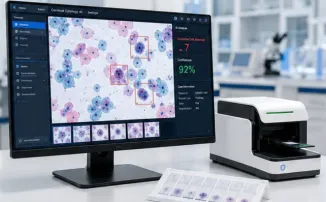
AI-assisted diagnostic technology for cervical cytology refers to medical artificial intelligence that applies digital image processing, nuclear and cytoplasmic segmentation, deep-learning classification, abnormal-cell detection, infectious-organism recognition and risk prediction to digitized images of conventional Pap smears or liquid-based cytology slides. It supports cytotechnologists and pathologists with specimen adequacy assessment, preliminary screening, negative-positive triage, suspicious-cell localization, lesion-category suggestions, case prioritization and structured reporting. A typical solution combines digital image acquisition, algorithmic analysis, case management, expert review and data storage, and is embedded in the screening and diagnostic workflow through a human-in-the-loop model.
The market covered by this study primarily includes cervical cytology algorithms, standalone AI-assisted diagnostic software, cloud analysis platforms, integrated digital cytology systems and per-case analytical services. Commercial models include perpetual software licenses, annual subscriptions, platform fees, algorithm-module licensing, software revenue embedded in integrated systems and per-case charges. Core functions include rapid negative-case triage, abnormal-cell and region-of-interest detection, Bethesda-related classification support, quality control, case ranking and remote review. Major customers include hospital pathology departments, independent medical laboratories, regional pathology centers, maternal and child health institutions and public cervical cancer screening programs. As software has relatively low replication costs but requires substantial investment in data, algorithm development, clinical validation and regulatory approval, established products commonly achieve gross margins of approximately 68%–84%.
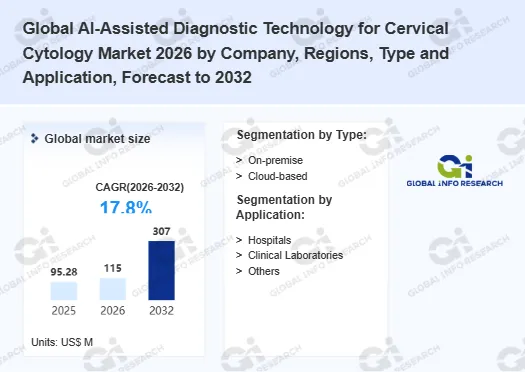
According to the latest report "Global AI-Assisted Diagnostic Technology for Cervical Cytology Market 2026 by Manufacturers, Regions, Type and Application, Forecast to 2032"published by GIR (Global Info Research), the global AI-Assisted Diagnostic Technology for Cervical Cytology market was valued at approximately USD 95.28 million in 2025 and is projected to reach USD 115 million in 2026. With a CAGR of 17.8% during the forecast period from 2026 to 2032, the market is expected to further expand to approximately USD 307 million by 2032. This growth is driven by increasing market demand, evolving industry trends, and expanding application opportunities worldwide.
The market size mainly covers software licensing, annual subscriptions, algorithm modules, digital cytology platform software, cloud analysis, per-case services and the AI-related value embedded in integrated systems. The industry is transitioning from clinical validation and pilot implementation toward broader commercial deployment. Demand growth is being driven by expansion of cervical cancer screening, shortages of qualified cytology personnel, increasing slide volumes, development of regional pathology networks, wider availability of digital scanners and the need for greater diagnostic consistency. On the supply side, companies are moving beyond isolated abnormal-cell detection toward end-to-end platforms covering imaging, quality control, pre-screening, decision support, remote review and reporting. Future incremental revenue is expected to come from large laboratory deployments, public screening programs, remote services for underserved regions and deeper integration with scanners, LIS platforms and pathology information systems.
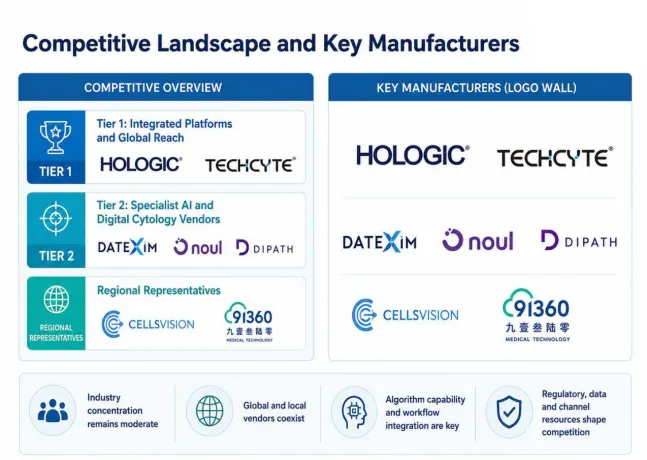
The competitive landscape is characterized by a small group of integrated platform suppliers, rapidly expanding specialist AI companies and regional vendors pursuing localized deployment. Overall market concentration is moderate. Hologic represents the leading tier, supported by its combination of cervical cytology sample-processing experience, digital imaging, AI algorithms, review workstations and an established laboratory customer base. The second tier includes Techcyte, Datexim and Noul. Techcyte emphasizes an open pathology AI platform and laboratory workflow integration, Datexim specializes in digital cervical cytology and remote diagnostic workflows, while Noul integrates staining, imaging and AI analysis in a compact system designed to reduce dependence on large laboratory infrastructure. Representative Chinese and regional participants include Dipath, CellsVision and 91360 Medical Technology, which compete through locally sourced data, Chinese-language reporting, compatibility with domestic scanners, hospital system interfaces and public screening projects. Competition is expected to shift from stand-alone sensitivity and specificity metrics toward multicenter evidence, compatibility with different preparation and staining methods, regulatory approvals, real-world stability, workflow efficiency and commercial channel coverage.
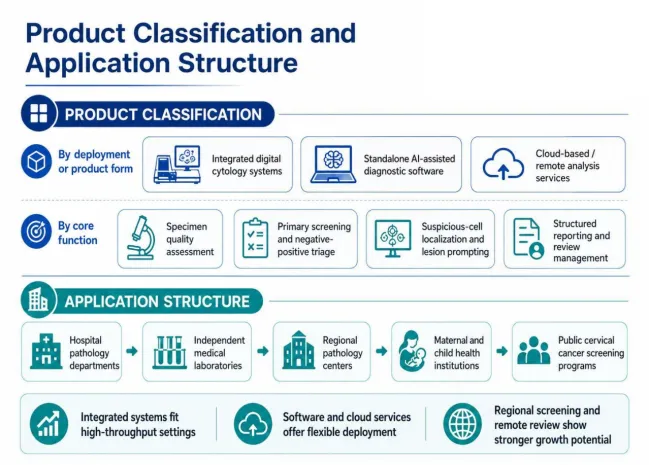
By product and deployment model, the market can be divided into integrated digital imaging and AI systems, standalone AI-assisted diagnostic software, and cloud-based or remote analysis services. Integrated systems combine sample workflow, digital imaging, algorithmic analysis and review terminals, offering a high degree of standardization for large laboratories, regional centers and newly established screening networks. Standalone software processes digital slides generated by third-party scanners and enables hospitals to add cervical cytology capabilities to existing digital pathology infrastructure. Cloud and per-case services reduce initial capital requirements and are suitable for institutions with variable sample volumes, limited specialist resources or cross-regional review needs. By workflow function, the market can be divided into specimen-quality assessment and negative triage, suspicious-cell localization and classification support, case prioritization and expert review, and structured reporting and quality management. Faster-growing segments are expected to include whole-slide analysis, multi-scanner compatibility, cloud-edge collaboration, batch triage of negative cases, suspicious-cell galleries and multi-institution remote review.
North America currently represents one of the largest markets by value, supported by strong digital pathology investment, high-volume reference laboratories and the ability to purchase complete digital cytology systems and recurring software services. Europe has an established cervical cancer screening infrastructure and an active environment for digital pathology adoption, laboratory quality management and collaboration between specialist software companies and clinical laboratories. Asia-Pacific is expected to be one of the fastest-growing regions. China, South Korea and Japan have substantial screening needs, expanding digital pathology infrastructure and an increasing number of local algorithm developers. The Chinese market is moving from research use and assisted screening toward regulated products, hospital procurement and regional screening projects. Latin America, Southeast Asia, the Middle East and parts of Africa have significant unmet screening needs, creating opportunities for compact integrated devices, remote review and per-case analysis services. However, deployment in these regions remains constrained by budgets, connectivity, specimen-preparation quality and the availability of follow-up treatment.
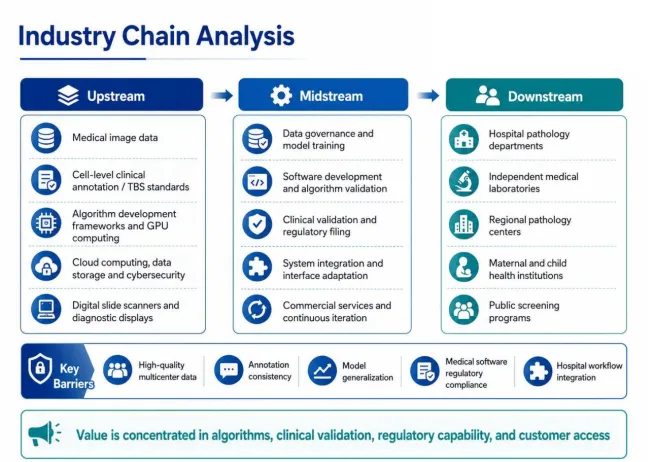
The upstream value chain includes de-identified medical image datasets, cell-level and case-level clinical annotations, Bethesda classification standards, algorithm-development frameworks, GPUs and other computing resources, cloud services, servers, data storage, cybersecurity technologies, slide scanners, microscope imaging modules, diagnostic displays and interfaces to pathology information systems. Midstream companies undertake data governance, model training, algorithm validation, software development, clinical studies, regulatory submissions, system integration, version updates and commercialization, often partnering with slide-preparation, staining, scanner and laboratory information system suppliers. Downstream customers include hospital pathology departments, independent laboratories, regional pathology centers, maternal and child health institutions, screening providers and public-health programs. Key barriers include access to representative multicenter datasets, annotation consistency, generalization across preparation and staining methods, detection of rare abnormal cells, clinical responsibility, medical software registration, data security and workflow integration. Value is concentrated in clinically validated algorithms, regulatory approvals, real-world databases, laboratory access and recurring software upgrades. The value chain is expected to move from isolated algorithm procurement toward coordinated delivery of scanners, AI, data platforms and remote pathology services.
The industry is influenced by medical AI regulation, digital pathology standards, software-as-a-medical-device requirements, patient-data protection and cervical cancer screening policies. Vendors need quality systems covering data provenance, training-set representativeness, locked or adaptive algorithm management, performance validation, cybersecurity, version control and post-market surveillance. Technical challenges include the low proportion of abnormal cells within each slide, overlapping cells, complex inflammatory backgrounds, variation in slide preparation and staining, inconsistent scan quality and the risk of reduced performance across different patient groups and scanner platforms. Commercial challenges include long hospital purchasing cycles, evolving reimbursement and pricing models, upfront investment in scanners, the need to redesign laboratory workflows and changes in the role of cytology as HPV-based screening pathways expand.
Over the next several years, AI-assisted cervical cytology will evolve from a suspicious-cell highlighting tool into a digital cytology platform covering specimen quality control, whole-slide analysis, negative triage, lesion grading support, remote review and laboratory quality management. Deep-learning models will increasingly combine cell morphology, infectious organisms, clinical information and HPV results, while edge computing and cloud platforms will allow slides collected at primary-care sites to be reviewed by regional specialists. Human-AI collaboration and continuous quality feedback will remain central to clinical deployment. As screening programs expand, digital pathology infrastructure reaches more institutions and regulatory pathways become clearer, the market is likely to support integrated equipment companies, specialist AI platform providers and localized solution vendors. Companies that combine high-quality datasets, clinical evidence, regulatory capability, scanner interoperability, hospital integration and scalable services will be best positioned for sustained growth.
AI-Assisted Diagnostic Technology for Cervical Cytology Report Chapter Summary:
Chapter 1: AI-Assisted Diagnostic Technology for Cervical Cytology Industry Definition and Market Overview
This chapter clearly defines the product definition, characteristics, and industry statistical scope of AI-Assisted Diagnostic Technology for Cervical Cytology, systematically introduces its mainstream product classifications and key application areas, and presents the overall size and future outlook of the global market.
Chapter 2: In-depth Analysis of Core AI-Assisted Diagnostic Technology for Cervical Cytology Companies (2021-2025)
This chapter focuses on the main players in the AI-Assisted Diagnostic Technology for Cervical Cytology market. For each representative company, it not only introduces its basic overview, main business, and product portfolio, but also highlights its core operating data in the AI-Assisted Diagnostic Technology for Cervical Cytology field, including sales volume, sales revenue, pricing strategies, and the latest development trends of the company from 2021 to 2025.
Chapter 3: Global Competitive Landscape Analysis (2021-2025)
This chapter examines the global AI-Assisted Diagnostic Technology for Cervical Cytology competitive landscape from a macro perspective. By comparing the AI-Assisted Diagnostic Technology for Cervical Cytology sales volume, pricing, revenue, and market share of major companies from 2021 to 2025, it quantitatively analyzes market concentration and interprets the competitive strategies and market position evolution of core manufacturers.
Chapter 4: AI-Assisted Diagnostic Technology for Cervical Cytology Major Regional Market Size and Prospects (2021-2032)
This chapter conducts a regional-level analysis of the global AI-Assisted Diagnostic Technology for Cervical Cytology core markets. It will present historical data on the AI-Assisted Diagnostic Technology for Cervical Cytology market size (sales volume and revenue from 2021-2025) in major regions such as North America, Europe, and Asia Pacific, and provide market outlook forecasts for 2026-2032.
Chapter 5: AI-Assisted Diagnostic Technology for Cervical Cytology Product Type Segmentation Market Forecast (2021-2032)
This chapter delves into the AI-Assisted Diagnostic Technology for Cervical Cytology product structure. It will segment the AI-Assisted Diagnostic Technology for Cervical Cytology market by different types (such as On-premise、Cloud-based, etc.), and analyze in detail the historical market size of each segmented product category from 2021 to 2025 and the future growth trends from 2026 to 2032.
Chapter 6: AI-Assisted Diagnostic Technology for Cervical Cytology Application Field Segmentation Market Forecast (2021-2032)
This chapter delves into the downstream application demand for AI-Assisted Diagnostic Technology for Cervical Cytology. The market will be segmented by different application areas (such as Hospitals、Clinical Laboratories、Others, etc.), presenting the historical market size for each area from 2021-2025 and future demand forecasts from 2026-2032.
Chapters 7-11: In-depth Analysis of Global Regional Markets (2021-2032)
This section is the core module of the AI-Assisted Diagnostic Technology for Cervical Cytology report, providing an in-depth country/regional analysis across five major regions: North America, Europe, Asia Pacific, South America, and the Middle East & Africa. The chapter structure for each region is consistent:
Segmentation by Country/Region: Analysis of the market size and forecasts for major countries within the region from 2021-2032.
Segmentation by Product Type: Presentation of the market structure and development forecasts for different product types within the region from 2021-2032.
Segmentation by Application Area: Analysis of market demand and prospects for different application areas within the region from 2021-2032.
Chapter 12: Global AI-Assisted Diagnostic Technology for Cervical Cytology Market Dynamics, Challenges, and Trends
This chapter aims to analyze the key internal and external factors affecting the development of the AI-Assisted Diagnostic Technology for Cervical Cytology market. It systematically reviews the core drivers of AI-Assisted Diagnostic Technology for Cervical Cytology market growth, the main obstacles and challenges faced, and assesses future product, technology, and market development trends.
Chapter 13: AI-Assisted Diagnostic Technology for Cervical Cytology Industry Chain Structure Analysis
This chapter analyzes the entire industry chain ecosystem of the AI-Assisted Diagnostic Technology for Cervical Cytology industry. From upstream raw material supply to midstream production and manufacturing, and then to downstream end-use applications, it analyzes the current status, cost structure, and collaborative relationships of each link.
Chapter 14: Sales Channel Model Research
This chapter focuses on the distribution channels of AI-Assisted Diagnostic Technology for Cervical Cytology products. It analyzes the market share, advantages and disadvantages, and typical cases of mainstream sales channels, and explores the innovation and development trends of channel models.
Chapter 15: Research Conclusions and Strategic Recommendations
As a summary of the report, this chapter will distill the core findings and conclusions of the entire report and, based on a comprehensive understanding of the AI-Assisted Diagnostic Technology for Cervical Cytology market, provide actionable strategic development recommendations for industry participants and potential entrants.
For more information, please refer to "Global AI-Assisted Diagnostic Technology for Cervical Cytology Market 2026 by Manufacturers, Regions, Type and Application, Forecast to 2032". This report analyzes the supply and demand situation, development status, and changes in the industry, focusing on the development status of the industry, how to face the development challenges of the industry, industry development suggestions, industry competitiveness, and industry investment analysis and trend forecasts. The report also summarizes the overall development dynamics of the industry, including the impact of the latest US tariffs on the global supply chain, the supply relationship analysis of the industrial chain, and provides reference suggestions and specific solutions for the industry in terms of products.
Previous News:
Global Silicon Polyurethane (SPU) Sports Flooring Market Is Projected to Reach USD 4,737 Million by 2032, Expanding at a 4.9% CAGR During the 2026–2032 Forecast Period
Next News:
Tungsten Carbide Strips Market 2026: A 2.9% CAGR Points to a USD 69.11 Million Opportunity by 2032 as Woodworking, Mining and Wear-Part Demand Holds Steady
The copyright of this article belongs to Global Info Research. Without the written authorization of our company, no organization or individual may reprint, quote, copy, adapt or use it for commercial purposes in any way. When authorized to use, the original source must be indicated as "Global Info Research" and the complete copyright information must be retained.
- We Provide Professional, Accurate Market Analysis to Help You Stay Ahead of Your Competition.Speak to our analyst >>

Our Clients
What We Can Provide?
With better results and higher quality products,Our professional reports can achieve four things:

Insight into the industry market information

Analyze market development needs

Prospects for future development

Develop industry investment strategy
- Digging deeper into global industry information and providing market strategies.Contact Us >>
- We Provide Professional, Accurate Market Analysis to Help You Stay Ahead of Your Competition.Speak to our analyst >>
Our Clients
What We Can Provide?
With better results and higher quality products,Our professional reports can achieve four things:
Insight into the industry market information
Analyze market development needs
Prospects for future development
Develop industry investment strategy
- Digging deeper into global industry information and providing market strategies.Contact Us >>