
Shrimp Farming Probiotics Market Forecast 2026–2032: 7.9% CAGR, USD 133 Million Opportunity, and Strategic Recommendations as Competition Shifts from Products to Integrated Farm Solutions
Published Date: Friday,06 Nov,2026


Shrimp farming probiotics refer to functional microbial preparations applied during shrimp cultivation to regulate aquatic microbial ecosystems, improve shrimp health conditions and enhance farming efficiency. These products are typically developed from beneficial microorganisms such as Bacillus species, Lactobacillus species, yeast strains and other functional microbial communities, and are manufactured through strain screening, fermentation cultivation, stabilization processing and formulation technologies. Product forms generally include powder, liquid, granular and feed-additive formats.
The primary functions of shrimp farming probiotics include improving water quality, accelerating organic matter decomposition, reducing accumulation of harmful metabolites, maintaining intestinal microbial balance, enhancing stress resistance and supporting disease management. These products are widely applied in commercial shrimp species such as whiteleg shrimp (Litopenaeus vannamei), particularly in pond farming, intensive aquaculture systems, biofloc systems and recirculating aquaculture systems.
Scientific studies have demonstrated that probiotic microorganisms, especially Bacillus-based strains, play an important role in shrimp aquaculture by improving microbial balance, supporting water quality management and enhancing shrimp health performance.
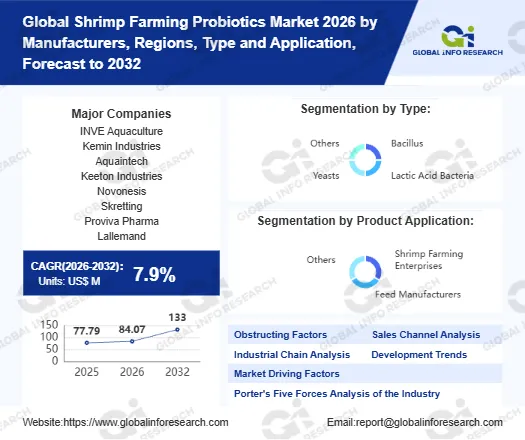
According to the latest report "Global Shrimp Farming Probiotics Market 2026 by Manufacturers, Regions, Type and Application, Forecast to 2032" published by GIR (Global Info Research), the global Shrimp Farming Probiotics market was valued at approximately USD 77.79 million in 2025 and is projected to reach USD 84.07 million in 2026. With a CAGR of 7.9% during the forecast period from 2026 to 2032, the market is expected to further expand to approximately USD 133 million by 2032. This growth is driven by increasing market demand, evolving industry trends, and expanding application opportunities worldwide.
The industry growth is primarily driven by the expansion of global shrimp farming capacity, increasing demand for sustainable aquaculture practices, reduction of antibiotic dependency, and rising requirements for disease prevention and production stability. From the supply perspective, manufacturers are increasingly focusing on multi-strain formulations, microbial combination technologies, strain stabilization and farm-level technical services.
Kemin’s Prozyta™ Aqua product is designed for fish and shrimp aquaculture and combines probiotic strains with enzyme technology to support sludge degradation, water quality improvement and shrimp production performance. The product is positioned for shrimp farming systems facing organic waste accumulation, ammonia and water quality challenges.
Overall, shrimp farming probiotics remain in a growth and adoption expansion stage. Future market expansion will mainly come from large-scale shrimp farming regions in Asia and Latin America, as well as emerging production models such as biofloc technology, recirculating aquaculture systems and precision aquaculture.
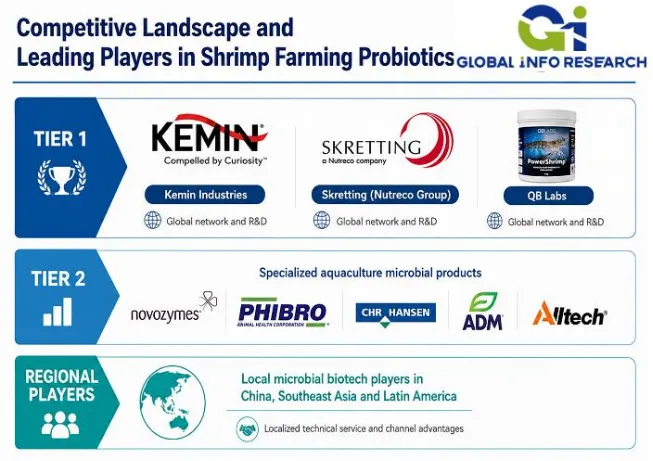
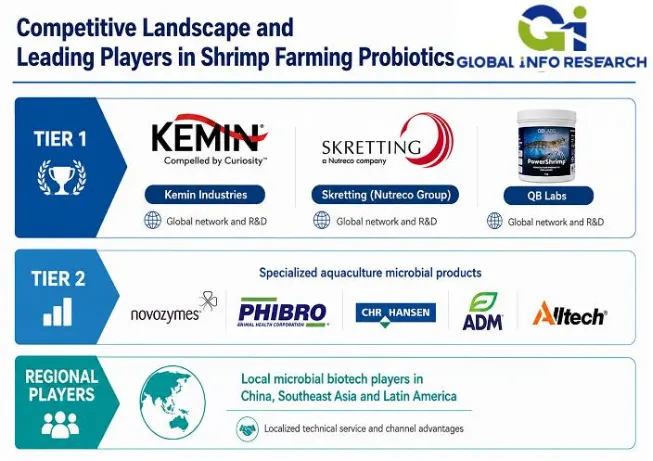
The global shrimp farming probiotics market is characterized by competition among multinational animal nutrition companies, aquaculture health solution providers, biotechnology enterprises and regional microbial product manufacturers.
The first tier consists of companies with global distribution networks, strong microbial research capabilities and integrated aquaculture solution capabilities. Representative companies include Kemin Industries and Skretting (Nutreco Group). These companies benefit from established animal nutrition platforms, international customer networks and application validation capabilities.
Kemin provides aquaculture health management solutions including Prozyta™, a probiotic product line designed for water and soil management in aquaculture systems. The company emphasizes microbial solutions for improving water quality, managing organic sludge and supporting sustainable shrimp production.
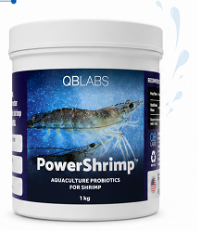
The second tier consists of specialized aquaculture biotechnology companies focusing on shrimp farming applications. QB Labs develops PowerShrimp™, a shrimp-specific probiotic blend based on multiple Bacillus strains. The product is designed for intensive and semi-intensive shrimp farming systems to improve pond environments, reduce pathogen pressure and increase shrimp yield performance.
Regional suppliers in China, Southeast Asia and Latin America also represent an important competitive group. Their advantages include localized technical support, close relationships with shrimp farmers and rapid response to regional farming conditions.
Future competition will gradually shift from simple probiotic product sales toward integrated capabilities including strain resources, application databases, farm management support and comprehensive aquaculture solutions.
Shrimp farming probiotics can be classified mainly by product type and application method.
By product type, shrimp farming probiotics can be divided into single-strain probiotic products and multi-strain probiotic products. Single-strain products focus on specific microbial functions and provide relatively clear performance characteristics and production control. Multi-strain products combine different microorganisms to achieve synergistic effects, including organic matter degradation, pathogen inhibition, water quality improvement and intestinal health regulation. Multi-strain formulations are becoming increasingly important in intensive shrimp farming systems.
By application method, shrimp farming probiotics can be divided into water treatment probiotics and feed additive probiotics. Water treatment probiotics are mainly applied directly into ponds or aquaculture systems to regulate microbial communities, improve bottom sediment conditions and reduce harmful compounds such as ammonia and nitrite. Feed additive probiotics are incorporated into shrimp feed to improve intestinal microbiota balance, nutrient utilization and growth performance.
With the development of precision aquaculture, integrated applications combining environmental probiotics and feed probiotics are expected to become increasingly common.
Global production and consumption of shrimp farming probiotics are concentrated mainly in Asia, Latin America and selected emerging aquaculture regions.
Asia represents the largest application region due to its extensive shrimp farming base, high stocking density and strong demand for disease prevention technologies. China, Vietnam, India, Indonesia and Thailand are important shrimp farming markets where probiotic products are increasingly adopted to improve production stability and reduce biological risks.
Latin America, particularly Ecuador, has become a major global shrimp production region with large-scale industrial farming systems. The demand for microbial solutions supporting higher productivity, environmental management and sustainable production continues to increase.
North America and Europe play a stronger role in microbial technology development, aquaculture nutrition research and high-value aquaculture solutions. Future regional opportunities will be driven by stricter food safety requirements, sustainable seafood standards and increasing restrictions on antibiotic usage.
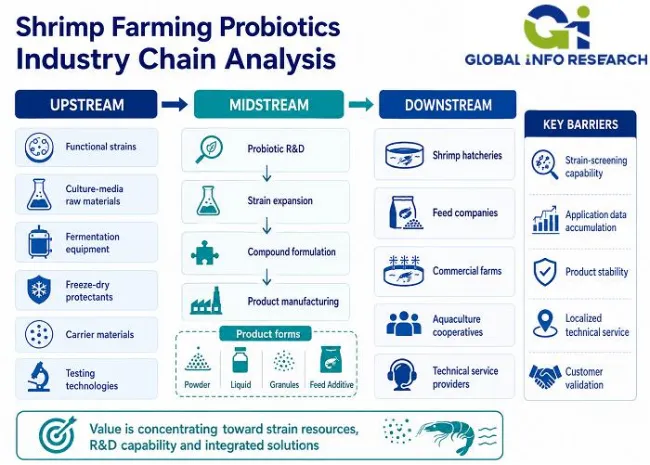
The upstream shrimp farming probiotics supply chain includes microbial strain resources, fermentation raw materials, fermentation equipment, stabilization materials, carriers and testing technologies. Among these factors, strain selection, fermentation capability and product stability are key determinants of product performance.
The midstream segment consists of companies engaged in microbial research, strain cultivation, formulation development and probiotic production. Products are supplied in different forms including powders, liquids and feed additives.
The downstream market includes shrimp hatcheries, aquaculture feed producers, commercial shrimp farms, aquaculture cooperatives and technical service providers.
Major industry barriers include microbial strain development capability, long-term farming application data accumulation, product stability control, regional technical support networks and customer acceptance. Future value creation will increasingly concentrate on companies with proprietary microbial resources, strong R&D capabilities and integrated aquaculture service platforms.
The shrimp farming probiotics industry is influenced by global trends toward sustainable food production, antibiotic reduction, environmental protection and improved aquaculture efficiency. Regulatory requirements related to aquaculture inputs, microbial safety evaluation and production management continue to become more sophisticated. Companies need to invest in strain safety validation, quality control systems, product certification and field application testing. At the same time, the industry faces challenges including differences among farming environments, variable product effectiveness, high requirements for microbial stability and pricing pressure.
In the coming years, shrimp farming probiotics are expected to develop toward higher functionality, precision application and integrated farming solutions. Growth opportunities will come from expanding shrimp consumption, industrial-scale aquaculture development and digital aquaculture management. Companies with advanced microbial technologies, application data capabilities and global distribution networks are expected to gain stronger competitive advantages. The competitive focus will gradually evolve from individual probiotic products toward integrated ecosystems combining microorganisms, products, technical services and farm management solutions.
Shrimp Farming Probiotics Report Chapter Summary:
Chapter 1: Shrimp Farming Probiotics Industry Definition and Market Overview
This chapter clearly defines the product definition, characteristics, and industry statistical scope of Shrimp Farming Probiotics, systematically introduces its mainstream product classifications and key application areas, and presents the overall size and future outlook of the global market.
Chapter 2: In-depth Analysis of Core Shrimp Farming Probiotics Companies (2021-2025)
This chapter focuses on the main players in the Shrimp Farming Probiotics market. For each representative company, it not only introduces its basic overview, main business, and product portfolio, but also highlights its core operating data in the Shrimp Farming Probiotics field, including sales volume, sales revenue, pricing strategies, and the latest development trends of the company from 2021 to 2025.
Chapter 3: Global Competitive Landscape Analysis (2021-2025)
This chapter examines the global Shrimp Farming Probiotics competitive landscape from a macro perspective. By comparing the Shrimp Farming Probiotics sales volume, pricing, revenue, and market share of major companies from 2021 to 2025, it quantitatively analyzes market concentration and interprets the competitive strategies and market position evolution of core manufacturers.
Chapter 4: Shrimp Farming Probiotics Major Regional Market Size and Prospects (2021-2032)
This chapter conducts a regional-level analysis of the global Shrimp Farming Probiotics core markets. It will present historical data on the Shrimp Farming Probiotics market size (sales volume and revenue from 2021-2025) in major regions such as North America, Europe, and Asia Pacific, and provide market outlook forecasts for 2026-2032.
Chapter 5: Shrimp Farming Probiotics Product Type Segmentation Market Forecast (2021-2032)
This chapter delves into the Shrimp Farming Probiotics product structure. It will segment the Shrimp Farming Probiotics market by different types (such as Bacillus、Lactic Acid Bacteria、Yeasts、Others, etc.), and analyze in detail the historical market size of each segmented product category from 2021 to 2025 and the future growth trends from 2026 to 2032.
Chapter 6: Shrimp Farming Probiotics Application Field Segmentation Market Forecast (2021-2032)
This chapter delves into the downstream application demand for Shrimp Farming Probiotics. The market will be segmented by different application areas (such as Shrimp Farming Enterprises、Feed Manufacturers、Others, etc.), presenting the historical market size for each area from 2021-2025 and future demand forecasts from 2026-2032.
Chapters 7-11: In-depth Analysis of Global Regional Markets (2021-2032)
This section is the core module of the Shrimp Farming Probiotics report, providing an in-depth country/regional analysis across five major regions: North America, Europe, Asia Pacific, South America, and the Middle East & Africa. The chapter structure for each region is consistent:
Segmentation by Country/Region: Analysis of the market size and forecasts for major countries within the region from 2021-2032.
Segmentation by Product Type: Presentation of the market structure and development forecasts for different product types within the region from 2021-2032.
Segmentation by Application Area: Analysis of market demand and prospects for different application areas within the region from 2021-2032.
Chapter 12: Global Shrimp Farming Probiotics Market Dynamics, Challenges, and Trends
This chapter aims to analyze the key internal and external factors affecting the development of the Shrimp Farming Probiotics market. It systematically reviews the core drivers of Shrimp Farming Probiotics market growth, the main obstacles and challenges faced, and assesses future product, technology, and market development trends.
Chapter 13: Shrimp Farming Probiotics Industry Chain Structure Analysis
This chapter analyzes the entire industry chain ecosystem of the Shrimp Farming Probiotics industry. From upstream raw material supply to midstream production and manufacturing, and then to downstream end-use applications, it analyzes the current status, cost structure, and collaborative relationships of each link.
Chapter 14: Sales Channel Model Research
This chapter focuses on the distribution channels of Shrimp Farming Probiotics products. It analyzes the market share, advantages and disadvantages, and typical cases of mainstream sales channels, and explores the innovation and development trends of channel models.
Chapter 15: Research Conclusions and Strategic Recommendations
As a summary of the report, this chapter will distill the core findings and conclusions of the entire report and, based on a comprehensive understanding of the Shrimp Farming Probiotics market, provide actionable strategic development recommendations for industry participants and potential entrants.
For more information, please refer to "Global Shrimp Farming Probiotics Market 2026 by Manufacturers, Regions, Type and Application, Forecast to 2032". This report analyzes the supply and demand situation, development status, and changes in the industry, focusing on the development status of the industry, how to face the development challenges of the industry, industry development suggestions, industry competitiveness, and industry investment analysis and trend forecasts. The report also summarizes the overall development dynamics of the industry, including the impact of the latest US tariffs on the global supply chain, the supply relationship analysis of the industrial chain, and provides reference suggestions and specific solutions for the industry in terms of products.
Previous News:
Global Sodium-Ion Battery Pack Market Report 2026: 24.2% CAGR Forecast Through 2032 as Industry Value Set to Climb from USD 2,388 Million to USD 8,775 Million
Next News:
The copyright of this article belongs to Global Info Research. Without the written authorization of our company, no organization or individual may reprint, quote, copy, adapt or use it for commercial purposes in any way. When authorized to use, the original source must be indicated as "Global Info Research" and the complete copyright information must be retained.
- We Provide Professional, Accurate Market Analysis to Help You Stay Ahead of Your Competition.Speak to our analyst >>

Our Clients
What We Can Provide?
With better results and higher quality products,Our professional reports can achieve four things:

Insight into the industry market information

Analyze market development needs

Prospects for future development

Develop industry investment strategy
- Digging deeper into global industry information and providing market strategies.Contact Us >>
- We Provide Professional, Accurate Market Analysis to Help You Stay Ahead of Your Competition.Speak to our analyst >>
Our Clients
What We Can Provide?
With better results and higher quality products,Our professional reports can achieve four things:
Insight into the industry market information
Analyze market development needs
Prospects for future development
Develop industry investment strategy
- Digging deeper into global industry information and providing market strategies.Contact Us >>