
Global Sodium-Ion Battery Pack Market Report 2026: 24.2% CAGR Forecast Through 2032 as Industry Value Set to Climb from USD 2,388 Million to USD 8,775 Million
Published Date: Friday,06 Nov,2026


Sodium-Ion Battery Pack Market Summary
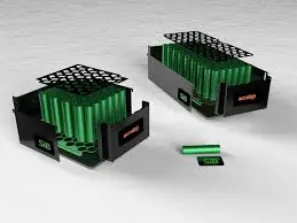
Sodium-Ion Battery Pack is an electrochemical energy storage assembly using sodium-ion cells as the core power source. It is attracting attention because of its potential cost advantages, raw material abundance, and suitability for short-duration storage and selected mobility applications. The pack generally includes cells, battery management systems, thermal management units, structural housings, and electrical connection components.
The industrial chain of Sodium-Ion Battery Pack includes upstream sodium-ion cells, cathode and anode materials, electrolytes, separators, BMS, cooling parts, and housings. Midstream covers pack design, module integration, electrical assembly, thermal management, safety validation, and testing. Downstream applications mainly include stationary energy storage, low-speed vehicles, backup power, industrial equipment, and selected mobility systems.
Global Sodium-Ion Battery Pack Market Size (US$ Million), 2021-2032
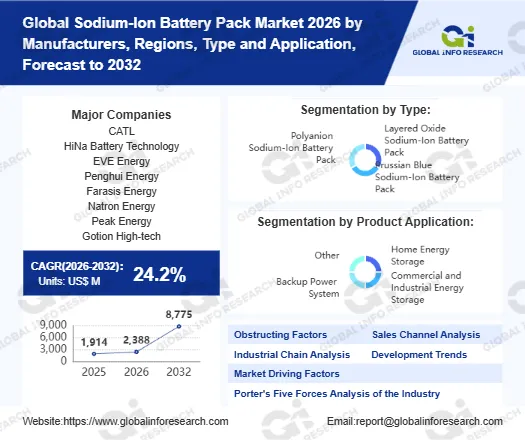
According to the latest report "Global Sodium-Ion Battery Pack Market 2026 by Manufacturers, Regions, Type and Application, Forecast to 2032" published by GIR (Global Info Research), the global Sodium-Ion Battery Pack market was valued at approximately USD 1914 million in 2025 and is projected to reach USD 2388 million in 2026. With a CAGR of 24.2% during the forecast period from 2026 to 2032, the market is expected to further expand to approximately USD 8775 million by 2032. This growth is driven by increasing market demand, evolving industry trends, and expanding application opportunities worldwide.
Global Sodium-Ion Battery Pack Top 10 Players Ranking and Market Share
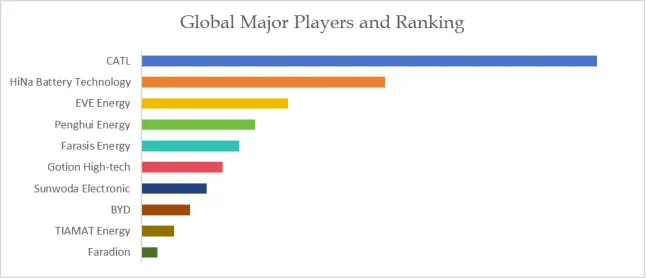
In 2025, the global top 10 players revenue share was approximately 80%.
Sodium-Ion Battery Pack is a rechargeable battery pack using sodium ions as the main charge carrier. It is positioned as a lower-cost and resource-abundant alternative to lithium-ion battery packs, especially for applications where safety, cost, low-temperature performance, and cycle life are more important than maximum energy density.
Competitive Landscape
The market is still in the early commercialization stage, with CATL, HiNa Battery Technology, EVE Energy, Penghui Energy, Farasis Energy, Gotion High-tech, Sunwoda Electronic, BYD, TIAMAT Energy, and Faradion as key participants. Chinese companies currently have stronger industrialization speed, supply-chain support, and pilot-scale deployment advantages.
Main Type
The main types can be divided into Energy Storage Sodium-Ion Battery Pack, Electric Vehicle Sodium-Ion Battery Pack, Two-wheeler Sodium-Ion Battery Pack, and Low-temperature Sodium-Ion Battery Pack. Energy storage and low-speed mobility are currently the most practical commercialization directions.
Downstream Applications
Downstream applications include energy storage systems, electric two-wheelers, low-speed electric vehicles, small commercial vehicles, backup power, industrial power systems, and other cost-sensitive battery fields. Energy storage is the most important application because sodium-ion batteries offer safety, lower material cost, and good cycle performance.
Regional Perspective
Asia Pacific is the leading region, mainly driven by China’s battery supply chain, electric mobility market, and large-scale energy storage demand. Europe is active in technology development and local battery supply-chain construction, while North America is more focused on energy storage, grid resilience, and alternative battery chemistry diversification.
Price Analysis
Sodium-ion battery pack prices are generally expected to be lower than lithium-ion battery packs after scale-up, mainly because sodium resources are more abundant and do not rely heavily on lithium, nickel, or cobalt. However, current prices may still be relatively high due to limited mass production, immature supply chains, and qualification costs.
Market Drivers
Market growth is driven by the need to reduce lithium dependence, lower battery material costs, improve battery safety, support grid energy storage, and expand low-cost electric mobility. Sodium-ion batteries are also attractive in cold regions because of their low-temperature performance and stable safety characteristics.
Industry Chain
The industry chain includes upstream sodium salts, cathode materials, anode materials, electrolytes, separators, current collectors, and additives. Midstream companies manufacture cells, modules, battery packs, and battery management systems. Downstream users include energy storage integrators, electric vehicle manufacturers, two-wheeler producers, backup power suppliers, and industrial power-system customers.
Sodium-Ion Battery Pack Report Chapter Summary:
Chapter 1: Sodium-Ion Battery Pack Industry Definition and Market Overview
This chapter clearly defines the product definition, characteristics, and industry statistical scope of Sodium-Ion Battery Pack, systematically introduces its mainstream product classifications and key application areas, and presents the overall size and future outlook of the global market.
Chapter 2: In-depth Analysis of Core Sodium-Ion Battery Pack Companies (2021-2025)
This chapter focuses on the main players in the Sodium-Ion Battery Pack market. For each representative company, it not only introduces its basic overview, main business, and product portfolio, but also highlights its core operating data in the Sodium-Ion Battery Pack field, including sales volume, sales revenue, pricing strategies, and the latest development trends of the company from 2021 to 2025.
Chapter 3: Global Competitive Landscape Analysis (2021-2025)
This chapter examines the global Sodium-Ion Battery Pack competitive landscape from a macro perspective. By comparing the Sodium-Ion Battery Pack sales volume, pricing, revenue, and market share of major companies from 2021 to 2025, it quantitatively analyzes market concentration and interprets the competitive strategies and market position evolution of core manufacturers.
Chapter 4: Sodium-Ion Battery Pack Major Regional Market Size and Prospects (2021-2032)
This chapter conducts a regional-level analysis of the global Sodium-Ion Battery Pack core markets. It will present historical data on the Sodium-Ion Battery Pack market size (sales volume and revenue from 2021-2025) in major regions such as North America, Europe, and Asia Pacific, and provide market outlook forecasts for 2026-2032.
Chapter 5: Sodium-Ion Battery Pack Product Type Segmentation Market Forecast (2021-2032)
This chapter delves into the Sodium-Ion Battery Pack product structure. It will segment the Sodium-Ion Battery Pack market by different types (such as Layered Oxide Sodium-Ion Battery Pack、Prussian Blue Sodium-Ion Battery Pack、Polyanion Sodium-Ion Battery Pack, etc.), and analyze in detail the historical market size of each segmented product category from 2021 to 2025 and the future growth trends from 2026 to 2032.
Chapter 6: Sodium-Ion Battery Pack Application Field Segmentation Market Forecast (2021-2032)
This chapter delves into the downstream application demand for Sodium-Ion Battery Pack. The market will be segmented by different application areas (such as Home Energy Storage、Commercial and Industrial Energy Storage、Backup Power System、Other, etc.), presenting the historical market size for each area from 2021-2025 and future demand forecasts from 2026-2032.
Chapters 7-11: In-depth Analysis of Global Regional Markets (2021-2032)
This section is the core module of the Sodium-Ion Battery Pack report, providing an in-depth country/regional analysis across five major regions: North America, Europe, Asia Pacific, South America, and the Middle East & Africa. The chapter structure for each region is consistent:
Segmentation by Country/Region: Analysis of the market size and forecasts for major countries within the region from 2021-2032.
Segmentation by Product Type: Presentation of the market structure and development forecasts for different product types within the region from 2021-2032.
Segmentation by Application Area: Analysis of market demand and prospects for different application areas within the region from 2021-2032.
Chapter 12: Global Sodium-Ion Battery Pack Market Dynamics, Challenges, and Trends
This chapter aims to analyze the key internal and external factors affecting the development of the Sodium-Ion Battery Pack market. It systematically reviews the core drivers of Sodium-Ion Battery Pack market growth, the main obstacles and challenges faced, and assesses future product, technology, and market development trends.
Chapter 13: Sodium-Ion Battery Pack Industry Chain Structure Analysis
This chapter analyzes the entire industry chain ecosystem of the Sodium-Ion Battery Pack industry. From upstream raw material supply to midstream production and manufacturing, and then to downstream end-use applications, it analyzes the current status, cost structure, and collaborative relationships of each link.
Chapter 14: Sales Channel Model Research
This chapter focuses on the distribution channels of Sodium-Ion Battery Pack products. It analyzes the market share, advantages and disadvantages, and typical cases of mainstream sales channels, and explores the innovation and development trends of channel models.
Chapter 15: Research Conclusions and Strategic Recommendations
As a summary of the report, this chapter will distill the core findings and conclusions of the entire report and, based on a comprehensive understanding of the Sodium-Ion Battery Pack market, provide actionable strategic development recommendations for industry participants and potential entrants.
For more information, please refer to "Global Sodium-Ion Battery Pack Market 2026 by Manufacturers, Regions, Type and Application, Forecast to 2032". This report analyzes the supply and demand situation, development status, and changes in the industry, focusing on the development status of the industry, how to face the development challenges of the industry, industry development suggestions, industry competitiveness, and industry investment analysis and trend forecasts. The report also summarizes the overall development dynamics of the industry, including the impact of the latest US tariffs on the global supply chain, the supply relationship analysis of the industrial chain, and provides reference suggestions and specific solutions for the industry in terms of products.
Previous News:
Global High-temperature Heat Pump Drying System Market Valued at US$966 Million in 2026, Projected to Reach US$1,619 Million by 2032 at 9.0% CAGR
Next News:
Shrimp Farming Probiotics Market Forecast 2026–2032: 7.9% CAGR, USD 133 Million Opportunity, and Strategic Recommendations as Competition Shifts from Products to Integrated Farm Solutions
The copyright of this article belongs to Global Info Research. Without the written authorization of our company, no organization or individual may reprint, quote, copy, adapt or use it for commercial purposes in any way. When authorized to use, the original source must be indicated as "Global Info Research" and the complete copyright information must be retained.
- We Provide Professional, Accurate Market Analysis to Help You Stay Ahead of Your Competition.Speak to our analyst >>

Our Clients
What We Can Provide?
With better results and higher quality products,Our professional reports can achieve four things:

Insight into the industry market information

Analyze market development needs

Prospects for future development

Develop industry investment strategy
- Digging deeper into global industry information and providing market strategies.Contact Us >>
- We Provide Professional, Accurate Market Analysis to Help You Stay Ahead of Your Competition.Speak to our analyst >>
Our Clients
What We Can Provide?
With better results and higher quality products,Our professional reports can achieve four things:
Insight into the industry market information
Analyze market development needs
Prospects for future development
Develop industry investment strategy
- Digging deeper into global industry information and providing market strategies.Contact Us >>