
Global Vapor Deposition Silicon Carbon Material Market Is Projected to Reach USD 2,188 Million by 2032, Expanding at a 10.4% CAGR During the 2026–2032 Forecast Period
Published Date: Friday,20 Nov,2026


 Vapor Deposition Silicon Carbon Material
 Market Summary
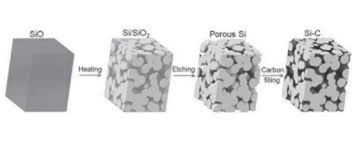
Vapor deposition silicon carbon material is a new type of lithium negative electrode material that forms nanoscale composite structures on the surface of silicon-based or carbon-based materials through chemical vapor deposition technology. It combines the high specific capacity of silicon with the structural stability of carbon, and is mainly used in the fields of power batteries and high-end consumer batteries.
Global Vapor Deposition Silicon Carbon Material Market Size (US$ Million), 2025-2031
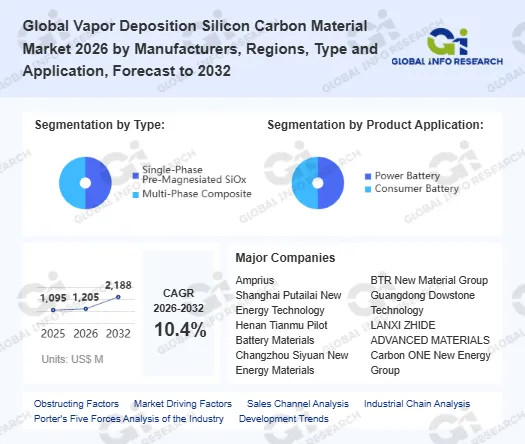
According to the latest report "Global Vapor Deposition Silicon Carbon Material Market 2026 by Manufacturers, Regions, Type and Application, Forecast to 2032" published by GIR (Global Info Research), the global Vapor Deposition Silicon Carbon Material market was valued at approximately USD 1095 million in 2025 and is projected to reach USD 1205 million in 2026. With a CAGR of 10.4% during the forecast period from 2026 to 2032, the market is expected to further expand to approximately USD 2188 million by 2032. This growth is driven by increasing market demand, evolving industry trends, and expanding application opportunities worldwide.
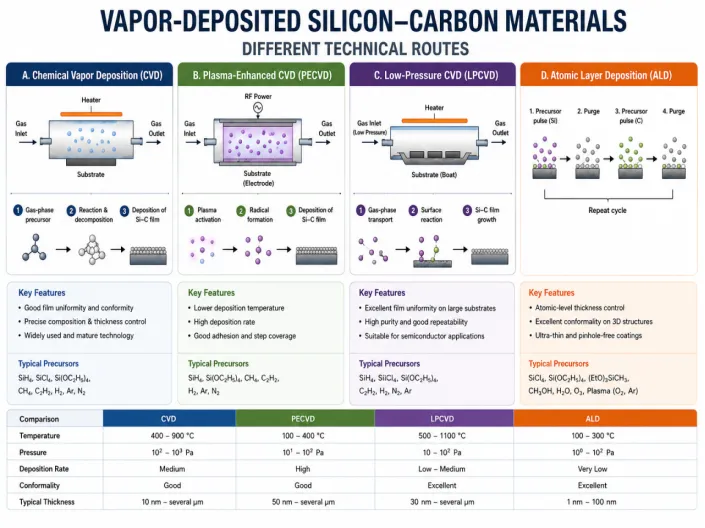
Comparison of Vapor-Phase Deposition Technologies for Silicon-Carbon Materials
Global Vapor Deposition Silicon Carbon Material Top 10 Players Ranking and Market Share (Ranking is based on the revenue of 2025, continually updated)
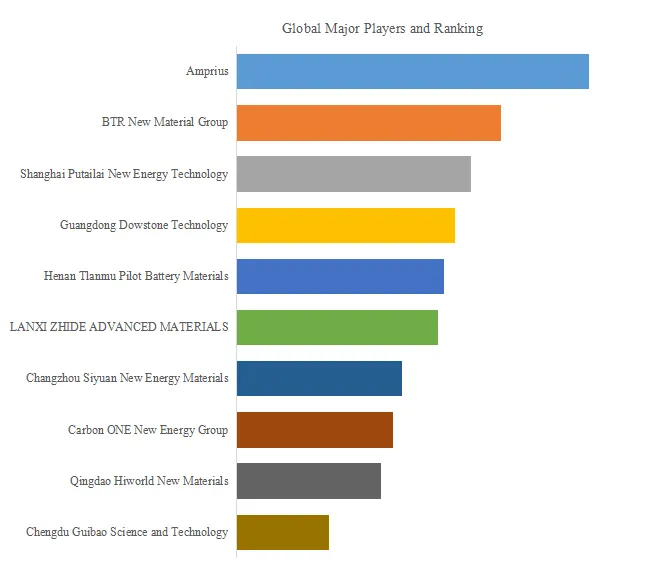
According to the research conducted by Global Info Research's leading enterprise research center, global producers of vapor deposited silicon carbon materials mainly include Amprius, BTR New Material Group, Shanghai Putailai New Energy Technology, and others.
By 2025, the top three global manufacturers will hold approximately 38.0% of the market share.
Vapor Deposition Silicon Carbon Material, Global Market Size, Split by Product Segment
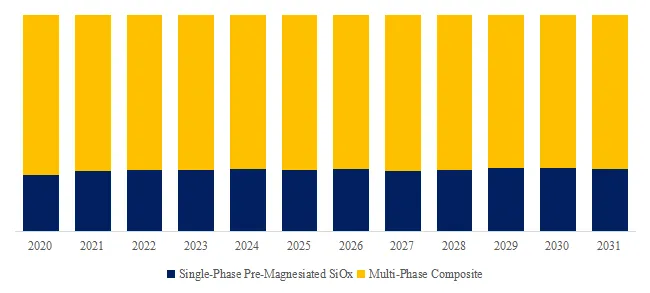
In terms of product types, multiphase composite is currently the most important segmented product, accounting for approximately 71.8% of the market share.
Vapor Deposition Silicon Carbon Material, Global Market Size, Split by Application Segment
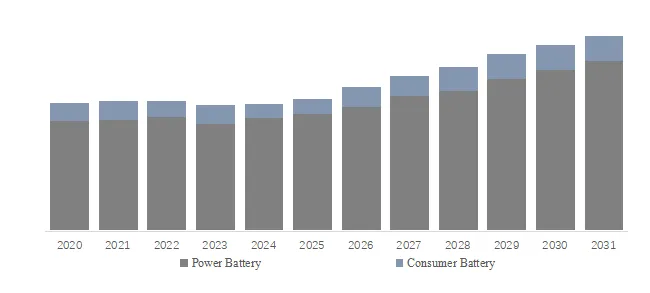
In terms of product applications, power batteries are currently the main source of demand, accounting for approximately 88.3% of the market share.
Vapor Deposition Silicon Carbon Material, Global Market Size, Split by Region
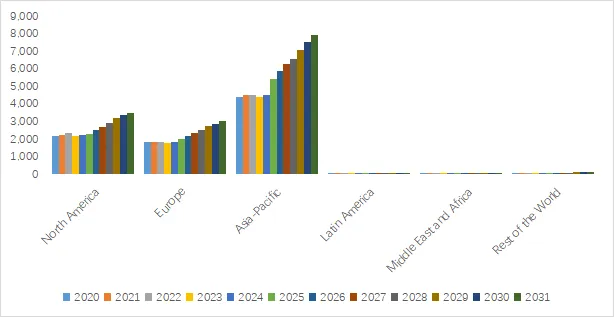
Main driving factors of vapor deposition silicon carbon materials:
Chemical vapor deposition (CVD) is the core preparation process for silicon-carbon anode materials. By depositing nanoscale silicon at the atomic level within a porous carbon framework, it can achieve an ultra-high gravimetric capacity of 1800-2000mAh/g and effectively suppress the volume expansion of silicon. It represents the most promising next-generation anode technology. Its development is driven by three major forces: First, the substitution demand for technological upgrading. The specific capacity of traditional graphite anodes has approached the theoretical limit of 372mAh/g, and CVD silicon-carbon materials, with their breakthrough performance, have become a core path for enhancing the energy density of lithium batteries. Second, the initial volume growth in consumer electronics. The extreme pursuit of battery endurance and thinness in 3C products such as AI phones and ultrabooks has made CVD silicon-carbon a starting scenario for large-scale applications. Third, the accelerated influx of industrial capital. Leading enterprises have already put CVD silicon-carbon production lines into operation, and downstream manufacturers have locked in all production capacity, marking the industry's official entry into an accelerated period of engineering and large-scale production.
The main obstacles are concentrated in three key areas: high costs, technological bottlenecks, and raw material supply chains. In terms of costs, the CVD method for preparing silicon-carbon anodes requires the use of two core raw materials: porous carbon and silane. The material cost alone is as high as 60,000 to 86,000 yuan per ton. Even after achieving mass production, the total cost is difficult to reduce below 100,000 yuan per ton. In contrast, the cost of traditional graphite anodes is only about 30,000 to 40,000 yuan per ton. The significant cost disadvantage remains a major obstacle to scaling up production. At the technological level, the selection and pore structure regulation of porous carbon substrates, the uniformity and floating silicon control during vapor deposition processes, and the dense coating layer technology all pose extremely high technical and equipment barriers. Especially when facing the requirement of thousands of cycles for long cycle life in power batteries, ensuring cycle stability remains a challenge. In addition, there are significant bottlenecks in the upstream supply chain of silane gas. Domestic sources capable of achieving stable bulk supply with excellent carbon coating effects are extremely scarce, and core gas phase coating equipment has long relied on imports, further restricting the rapid release of production capacity.
The industry's development opportunities present an unprecedentedly vast prospect. EVTank predicts that the market share of CVD vapor-phase silicon-carbon will exceed 75% by 2030, becoming the dominant technology route for silicon-based anode materials. Coupled with the continuous expansion of CVD process advantages, the mass production cost of CVD silicon-carbon anode has decreased significantly by 60% compared to traditional processes. At the same time, the volume expansion rate has been successfully controlled within 10%, and the cycle life has successfully exceeded 2800 cycles. It is opening up market space comprehensively with a high cost-effective attitude. The vast market penetration blue ocean is even more exciting. After consumer electronics took the lead in achieving large-scale applications, mainstream power battery manufacturers have generally made it clear that the silicon-carbon system will be used for mid-to-high-end models and high-rate application scenarios. Looking ahead, in addition to electric vehicles, which are the potential largest growth pole, emerging application scenarios such as low-altitude economy and humanoid robots also open up imaginative incremental space for vapor-phase deposition silicon-carbon materials.
Introduction to leading enterprise: Amprius Technologies
Amprius Technologies is a US-based company founded in 2008 by Stanford University Chinese professor Yi Cui and Mark Platshon. Headquartered in Fremont, California, the company specializes in the research, development, and production of silicon anode materials for high-energy density lithium-ion batteries. As early as 2016, the company pioneered the industry by developing a roll-to-roll silicon nanowire anode manufacturing equipment based on chemical vapor deposition (CVD) technology. Amprius' product portfolio includes two major battery platforms, SiCore and SiMaxx, both utilizing its proprietary silicon anode material system. Compared to traditional graphite-based batteries, it offers up to 80% energy improvement. Its representative SiCore battery boasts an energy density of 450Wh/kg and 950Wh/L, and has achieved commercial mass production. In 2025, it shipped to over 100 customers, including securing a $35 million order from UAS manufacturers. The company is also collaborating with Airbus on long-term projects, jointly advancing battery solutions for high-altitude pseudo-satellites and other initiatives.
Vapor Deposition Silicon Carbon Material Report Chapter Summary:
Chapter 1: Vapor Deposition Silicon Carbon Material Industry Definition and Market Overview
This chapter clearly defines the product definition, characteristics, and industry statistical scope of Vapor Deposition Silicon Carbon Material, systematically introduces its mainstream product classifications and key application areas, and presents the overall size and future outlook of the global market.
Chapter 2: In-depth Analysis of Core Vapor Deposition Silicon Carbon Material Companies (2021-2025)
This chapter focuses on the main players in the Vapor Deposition Silicon Carbon Material market. For each representative company, it not only introduces its basic overview, main business, and product portfolio, but also highlights its core operating data in the Vapor Deposition Silicon Carbon Material field, including sales volume, sales revenue, pricing strategies, and the latest development trends of the company from 2021 to 2025.
Chapter 3: Global Competitive Landscape Analysis (2021-2025)
This chapter examines the global Vapor Deposition Silicon Carbon Material competitive landscape from a macro perspective. By comparing the Vapor Deposition Silicon Carbon Material sales volume, pricing, revenue, and market share of major companies from 2021 to 2025, it quantitatively analyzes market concentration and interprets the competitive strategies and market position evolution of core manufacturers.
Chapter 4: Vapor Deposition Silicon Carbon Material Major Regional Market Size and Prospects (2021-2032)
This chapter conducts a regional-level analysis of the global Vapor Deposition Silicon Carbon Material core markets. It will present historical data on the Vapor Deposition Silicon Carbon Material market size (sales volume and revenue from 2021-2025) in major regions such as North America, Europe, and Asia Pacific, and provide market outlook forecasts for 2026-2032.
Chapter 5: Vapor Deposition Silicon Carbon Material Product Type Segmentation Market Forecast (2021-2032)
This chapter delves into the Vapor Deposition Silicon Carbon Material product structure. It will segment the Vapor Deposition Silicon Carbon Material market by different types (such as Single-Phase Pre-Magnesiated SiOx、Multi-Phase Composite, etc.), and analyze in detail the historical market size of each segmented product category from 2021 to 2025 and the future growth trends from 2026 to 2032.
Chapter 6: Vapor Deposition Silicon Carbon Material Application Field Segmentation Market Forecast (2021-2032)
This chapter delves into the downstream application demand for Vapor Deposition Silicon Carbon Material. The market will be segmented by different application areas (such as Power Battery、Consumer Battery, etc.), presenting the historical market size for each area from 2021-2025 and future demand forecasts from 2026-2032.
Chapters 7-11: In-depth Analysis of Global Regional Markets (2021-2032)
This section is the core module of the Vapor Deposition Silicon Carbon Material report, providing an in-depth country/regional analysis across five major regions: North America, Europe, Asia Pacific, South America, and the Middle East & Africa. The chapter structure for each region is consistent:
Segmentation by Country/Region: Analysis of the market size and forecasts for major countries within the region from 2021-2032.
Segmentation by Product Type: Presentation of the market structure and development forecasts for different product types within the region from 2021-2032.
Segmentation by Application Area: Analysis of market demand and prospects for different application areas within the region from 2021-2032.
Chapter 12: Global Vapor Deposition Silicon Carbon Material Market Dynamics, Challenges, and Trends
This chapter aims to analyze the key internal and external factors affecting the development of the Vapor Deposition Silicon Carbon Material market. It systematically reviews the core drivers of Vapor Deposition Silicon Carbon Material market growth, the main obstacles and challenges faced, and assesses future product, technology, and market development trends.
Chapter 13: Vapor Deposition Silicon Carbon Material Industry Chain Structure Analysis
This chapter analyzes the entire industry chain ecosystem of the Vapor Deposition Silicon Carbon Material industry. From upstream raw material supply to midstream production and manufacturing, and then to downstream end-use applications, it analyzes the current status, cost structure, and collaborative relationships of each link.
Chapter 14: Sales Channel Model Research
This chapter focuses on the distribution channels of Vapor Deposition Silicon Carbon Material products. It analyzes the market share, advantages and disadvantages, and typical cases of mainstream sales channels, and explores the innovation and development trends of channel models.
Chapter 15: Research Conclusions and Strategic Recommendations
As a summary of the report, this chapter will distill the core findings and conclusions of the entire report and, based on a comprehensive understanding of the Vapor Deposition Silicon Carbon Material market, provide actionable strategic development recommendations for industry participants and potential entrants.
For more information, please refer to "Global Vapor Deposition Silicon Carbon Material Market 2026 by Manufacturers, Regions, Type and Application, Forecast to 2032". This report analyzes the supply and demand situation, development status, and changes in the industry, focusing on the development status of the industry, how to face the development challenges of the industry, industry development suggestions, industry competitiveness, and industry investment analysis and trend forecasts. The report also summarizes the overall development dynamics of the industry, including the impact of the latest US tariffs on the global supply chain, the supply relationship analysis of the industrial chain, and provides reference suggestions and specific solutions for the industry in terms of products.
Previous News:
2026 Permalloy Foil Outlook: 8.1% CAGR Forecast as Ultra-Thin Foil, Stable Annealing and Magnetic Shielding Upgrades Push the Market Toward USD 527 Million by 2032
Next News:
Non-ferrous Metal Recycling Solutions Market 2026: An 8.0% CAGR Points to a USD 88,271 Million Opportunity by 2032 as Carbon Goals and Green Metal Demand Accelerate
The copyright of this article belongs to Global Info Research. Without the written authorization of our company, no organization or individual may reprint, quote, copy, adapt or use it for commercial purposes in any way. When authorized to use, the original source must be indicated as "Global Info Research" and the complete copyright information must be retained.
- We Provide Professional, Accurate Market Analysis to Help You Stay Ahead of Your Competition.Speak to our analyst >>

Our Clients
What We Can Provide?
With better results and higher quality products,Our professional reports can achieve four things:

Insight into the industry market information

Analyze market development needs

Prospects for future development

Develop industry investment strategy
- Digging deeper into global industry information and providing market strategies.Contact Us >>
- We Provide Professional, Accurate Market Analysis to Help You Stay Ahead of Your Competition.Speak to our analyst >>
Our Clients
What We Can Provide?
With better results and higher quality products,Our professional reports can achieve four things:
Insight into the industry market information
Analyze market development needs
Prospects for future development
Develop industry investment strategy
- Digging deeper into global industry information and providing market strategies.Contact Us >>